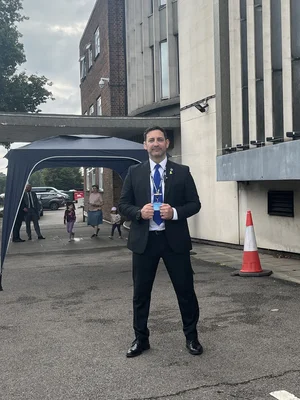
Field intelligence is not just information from a screen
A considerable amount of modern investigative work starts online. Public records, company filings, maps, published photographs and lawful open-source research can help establish leads before anyone travels to a location. That is efficient, but it creates a temptation to mistake digital traces for physical facts. An online profile can be outdated. A registered address may be an accountant’s office. A business may be active on paper and absent in practice. Field intelligence begins where those uncertainties need to be tested in the real world.
The enduring value of observation
Investigators once relied heavily on local knowledge, interviews, physical observation and written notes. Those skills remain relevant. A properly planned site visit may establish whether premises appear occupied, whether a trading address is in use or whether a location matches the client’s description. Surveillance may document observable movements over a defined period. A field enquiry may identify an appropriate next source of information. None of these methods guarantees a particular answer; each supplies a bounded piece of evidence that must be interpreted carefully.
Digital tools change speed, not standards
Navigation, secure communications, timestamped photographs and structured case-management systems can improve coordination. They can also introduce new risks: inaccurate location data, insecure sharing, excessive retention and the uncritical reuse of information obtained elsewhere. An investigator should know the provenance of material, why it is relevant and whether obtaining or retaining it is lawful. More data is not automatically better intelligence. Often the strongest report is the one that answers a narrow question with a small amount of dependable evidence.
The challenge of fragmented assignments
A national instruction can require several different capabilities. An initial desktop enquiry might identify a possible address; a local operator may then verify the location; a process server may attempt lawful service; a specialist investigator may undertake further enquiries if authorised. Without clear ownership, the work becomes fragmented. Different operators may duplicate effort, record evidence inconsistently or work to assumptions the client never approved. A managed deployment model is intended to address that operational gap.
Where FIND fits
FIND combines structured task assessment with a network of experienced field professionals. Its role is not to claim that every problem needs an investigator on the ground. It is to identify when physical verification is justified, define the objective and coordinate the appropriate service. The future of field intelligence is unlikely to be entirely digital or entirely physical. It is the disciplined combination of both, supported by clear instructions, proportionate methods and reports that tell clients what is known, what is not and what should happen next.
Next steps
Learn more about FIND and how our managed network brings together experienced investigators and specialist field operators. To discuss a requirement or explore professional collaboration, contact FIND.